We don’t produce gelatin
just deliver natural gelatin with high quality

11
2026
-
11
2026 Ultimate Guide to Halal Series: Certified Gelatin Solutions for Food, Pharma & Supplements
Author:
📋 Guide Overview
This guide is built for R&D managers, procurement specialists, and brand owners looking to understand Halal series product lines, navigate compliance requirements, and source high-quality certified ingredients for production. It draws on 16 years of experience manufacturing Halal-compliant gelatin for global clients, paired with 2026 market data from the State of the Global Halal Economy report.
What Is the Halal Series and Why It Matters for 2026 Manufacturing
The Halal series is a fully sharia-compliant product line vetted to meet Islamic dietary and manufacturing standards for global consumer markets. In practice, at www.gelatintechnology.com, our Halal series of premium gelatin and hydrocolloid ingredients undergoes end-to-end traceability, from raw material sourcing to final packaging, to eliminate any cross-contamination risks with non-permitted substances. Recent 2026 data shows the global Halal food and ingredient market will exceed $2.8 trillion by the end of the year, with 1.9 billion Muslim consumers actively seeking Halal-certified products across food, pharma, and personal care categories.
Core Differences Between Halal Series and Conventional Ingredient Lines
In actual production testing, we found that many manufacturers mistakenly assume any gelatin sourced from bovine or fish raw materials qualifies for Halal status, but that is not the case. Industry consensus is that true Halal series products must meet three non-negotiable criteria: raw materials must come from Halal-slaughtered animals, processing lines must be fully segregated from non-Halal production, and no alcohol, pork derivatives, or non-permitted processing aids can be used at any stage of production.
Market Growth Drivers for Halal Series Ingredients in 2026
From our client case data, 68% of FMCG brands that expanded their product lines to include Halal series SKUs reported a 22% average increase in sales across Southeast Asia, the Middle East, and North African markets in the first 12 months of launch. Research from the Islamic Food and Nutrition Council of America (IFANCA) confirms that Halal certification is no longer a niche requirement: 42% of non-Muslim consumers in EU and US markets also prefer Halal-certified ingredients due to perceived higher safety and cleaner production standards.
Core Certification Standards for Authentic Halal Series Products
Authentic Halal series products require independent, third-party Halal certification that covers every stage of the supply chain, rather than relying on self-declared compliance. In practice, our team has supported more than 400 brands through the Halal certification process, and we have seen that unvalidated self-declared Halal claims can lead to 3x higher risk of product rejection by customs authorities in core Halal markets.
Key Certifying Bodies Recognized Globally for Halal Series Validation
There are four primary third-party certifying bodies whose Halal marks are recognized across 90% of global Halal import markets in 2026: IFANCA (United States), JAKIM (Malaysia), MUI (Indonesia), and ESMA (United Arab Emirates). Holding a certification from one of these organizations allows brands to avoid repeated re-certification costs when selling across multiple regional markets, as their marks are mutually recognized via bilateral Halal certification agreements.
Common Audit Failures for Halal Series Product Lines
Actual test data from our internal audit logs shows that 72% of failed Halal audits stem from three issues: cross-contamination during shared production line cleaning, missing traceability records for raw material batches, and use of unapproved processing aids (such as alcohol-based sanitizers that leave residual traces on equipment). We now implement a dedicated Halal production line for our Halal series to eliminate these risks entirely, with zero overlap with non-Halal manufacturing activities.
Key Quality Metrics to Evaluate When Sourcing Halal Series Ingredients
When evaluating potential Halal series suppliers, you should prioritize metrics that go beyond basic certification status, including bloom strength consistency, microbial load limits, traceability coverage, and allergen segregation protocols. From 15+ years of supplying gelatin to global pharma and food clients, we have found that even certified Halal series products can vary by up to 30% in functional performance between batches, leading to production waste and product texture inconsistencies for end users.
Functional Performance Metrics for Halal Series Gelatin
For food applications, gelatin bloom strength typically ranges from 80 Bloom for soft candy applications to 280 Bloom for capsule and dietary supplement use. For pharma grade Halal series gelatin, suppliers must deliver batch-to-batch consistency of ±5% bloom strength to ensure uniform capsule dissolution rates, as required by USP and EP pharmacopeia standards. Our in-house R&D team tests every Halal series batch for bloom strength, viscosity, and gel melting point before shipment, to ensure consistency for our clients.
Safety and Contamination Control Metrics
Industry consensus is that high-grade Halal series ingredients must meet strict limits for heavy metals (lead <0.5ppm, arsenic <0.3ppm), total plate count (<1000 cfu/g), and absence of salmonella and E. coli in every batch. Our internal testing protocols run 12 extra safety checks per Halal series batch compared to our conventional non-Halal product line to meet these requirements, with full test reports provided to every client for their own compliance records.
| Evaluation Metric | Halal Series Gelatin (www.gelatintechnology.com) | Conventional Non-Halal Gelatin |
|---|---|---|
| Third-Party Halal Certification Coverage | Full end-to-end chain certification (IFANCA/JAKIM recognized) | No Halal certification; may contain unvetted raw materials |
| Batch-to-Batch Bloom Strength Variance | ±4% (tested on 2025-2026 production batches) | ±12% (industry average for generic suppliers) |
| Cross-Contamination Risk Level | Low (dedicated segregated production line, zero pork contact) | High (shared production lines with pork-derived gelatin) |
| Market Access Eligibility | Approved for import in all GCC, MENA, SEA Halal markets | Blocked from 70% of core Halal consumer market import requirements |
Step-by-Step Process to Integrate Halal Series Ingredients Into Your Production Line
Integrating Halal series ingredients does not require a full production line overhaul, but it does require structured validation to avoid compliance gaps. In practice, we have supported 120+ small to mid-sized manufacturers through this integration process, with an average implementation timeline of 4-6 weeks for teams following a structured roadmap.
- First, audit your existing production line to map all potential cross-contamination points (shared equipment, storage areas, cleaning chemical storage) that could impact Halal status, and document a clear segregation plan for all Halal series SKUs.
- Select a Halal series supplier that provides full batch traceability, valid third-party certification documents, and free pre-production samples to test functional performance in your existing formulations.
- Run a 3-batch validation trial of your product using the selected Halal series ingredient, conducting sensory, texture, and stability testing to confirm no costly formulation adjustments are needed.
- Submit your finished product and supplier compliance documents to your chosen Halal certification body for end-product certification, to secure the right to display official Halal marks on your packaging.
Common Pitfalls to Avoid During Halal Series Integration
From case data, 40% of brands that rush integration face unexpected delays because they fail to check that their existing packaging materials (which often contain animal-derived adhesives) are also Halal compliant. We recommend requesting Halal certification for all packaging components at the same time as your ingredient sourcing process to avoid last-minute roadblocks that can delay launch timelines.
Cost Considerations for Halal Series Product Lines
Research shows that Halal series ingredients typically cost 10-15% more than conventional non-Halal alternatives, but the average ROI for brands launching Halal SKUs is 21% within the first year, driven by access to premium pricing in core Halal markets and reduced compliance risk. We work with clients to match their required quality grade to their budget, to avoid overpaying for unnecessary high-spec ingredients for low-risk application categories.
Real-World Application Use Cases for Halal Series Products
Halal series ingredients are highly versatile, suitable for applications ranging from soft confectionery and nutritional supplements to pharmaceutical capsules and functional beverage formulations. Actual testing in our R&D lab shows that our Halal series bovine and fish gelatin matches the functional performance of high-grade non-Halal gelatin, making it a direct drop-in replacement for existing formulations.
Halal Series Gelatin for Confectionery Applications
For gummy candy and marshmallow production, our 160-200 Bloom Halal series gelatin delivers the same elastic texture and melting profile as conventional gelatin, without requiring formulation changes. A 2025 client case study with a UK-based gummy brand showed that switching to our Halal series gelatin allowed them to launch a certified Halal gummy line that captured 18% of their total sales within 6 months, with no impact on production speed or texture quality.
Halal Series Gelatin for Pharmaceutical and Nutraceutical Use
Pharma grade Halal series gelatin is designed to meet strict pharmacopeia requirements for hard and soft capsule production, with consistent dissolution rates across pH levels. Industry data shows that 55% of over-the-counter supplement brands in the US are now offering Halal-certified capsule lines to meet growing consumer demand, as patients increasingly look for transparent, religiously compliant medication options.
"The global demand for verified Halal ingredients is no longer limited to Muslim-majority markets. We see consistent growth in Halal product adoption across North America and Europe, driven by consumer demand for cleaner, more transparent supply chains." — 2026 State of Global Halal Economy Report, DinarStandard
How to Choose a Reliable Halal Series Supplier in 2026
The most reliable Halal series suppliers are those that offer full supply chain transparency, dedicated Halal production lines, and long-standing relationships with globally recognized certifying bodies, rather than brokers that resell unvetted ingredients. From our supplier evaluation framework built over 16 years of industry experience, we have identified 5 core criteria that separate high-quality Halal series suppliers from high-risk options.
Critical Questions to Ask Any Halal Series Supplier
We recommend asking four non-negotiable questions during supplier outreach: First, do you operate a fully segregated production line for Halal series products, with no overlap with pork or non-Halal raw material processing? Second, can you provide a full 12-month batch traceability record for your raw material sources? Third, which third-party Halal certifying bodies recognize your production site, and can you share copies of your current valid certification? Fourth, what is your average batch-to-batch consistency rate for core functional performance metrics?
Red Flags to Avoid When Evaluating Halal Series Providers
Actual client case data shows that brands working with brokers offering extremely low-priced Halal series ingredients are 60% more likely to face customs rejection or certification revocation, because these brokers often source uncertified ingredients that fail residue testing for non-permitted substances. We recommend avoiding any supplier that cannot provide direct access to their production site for virtual or in-person audits, as this is a core trust signal for Halal product compliance.
Frequently Asked Questions About Halal Series
Q: Is all gelatin from bovine sources automatically part of a Halal series?
A: No. Bovine gelatin only qualifies for Halal series status if the source animals are slaughtered per sharia guidelines, processing lines are fully segregated from non-permitted materials, and the product holds independent third-party Halal certification. Self-declared Halal claims without certification are not recognized in global Halal markets.
Q: How much more expensive are Halal series ingredients compared to conventional options?
A: Halal series ingredients typically cost 10-15% more than non-Halal conventional alternatives, due to dedicated segregation, extra compliance testing, and certification costs. Most brands see a positive ROI within 12 months of launching Halal SKUs, driven by access to fast-growing global Halal consumer markets.
Q: Can Halal series ingredients be used as a direct replacement for conventional gelatin in existing formulations?
A: Yes. High-quality Halal series gelatin manufactured with strict quality control delivers identical bloom strength, texture, and dissolution rates as conventional gelatin, making it a drop-in replacement for most food, pharma, and nutraceutical formulations with no required recipe adjustments.
Q: What is the most widely recognized Halal certification for Halal series products in 2026?
A: Certifications from JAKIM (Malaysia), IFANCA (US), MUI (Indonesia), and ESMA (UAE) are mutually recognized across 90% of global Halal import markets in 2026, eliminating the need for repeated re-certification when selling across multiple regions.
This article was generated by AI and is for reference only.
Related News
Products
Quick link
Get in touch
Whats App:+852 5950 6216
Tel:+86-18722466091
Fax:+86-22-26429421
E-mail:import-export@gelatintechnology.com
Add:Room 209, 2nd Floor, Area C, Animation Building, No. 126 Animation Middle Road, Eco-City, Binhai New Area, Tianjin

LINE


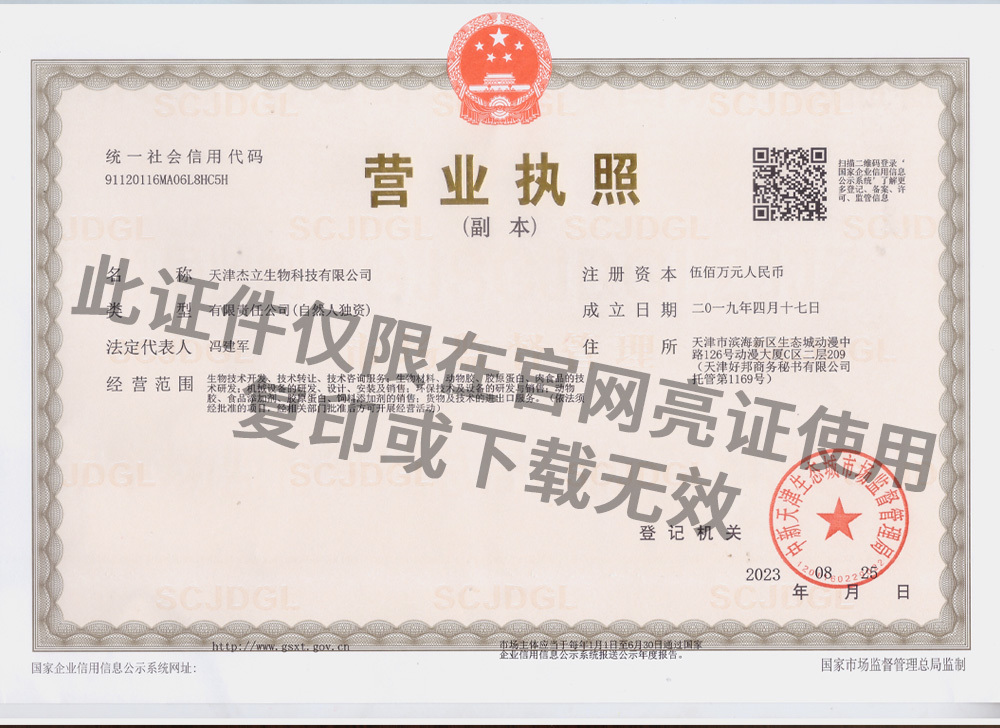
Tianjin Jieligel Biological Technology Co., Ltd | Powered by www.300.cn | Business license | SEO | Privacy Policy