We don’t produce gelatin
just deliver natural gelatin with high quality
03
2026
-
07
Gelatin and Collagen Whole Production Line: 2026 Full Optimization Guide
Author:
📋 Overview
This guide is developed based on our 17+ years of equipment deployment experience for 120+ gelatin processing factories across 27 countries, providing verified actionable advice for both new factory planning and old production line upgrading.
Basic Definition of Gelatin and Collagen Whole Production Li
In practice, more than 60% of new factory clients we surveyed in 2026 had unclear recognition of integrated production system configuration before investment. Gelatin and collagen whole production li refers to the fully integrated end-to-end manufacturing system that processes animal raw materials into standard gelatin and bioactive collagen products.
Actual test shows that integrated production lines have 32% higher overall efficiency than purchasing separate discrete units, as all modules are calibrated to match each other’s process parameters without extra debugging work. The standard full workflow of qualified production lines follows 5 core sequential steps:
- Raw material sorting, degreasing and pre-treatment to remove impurities
- Multi-stage gradient temperature extraction to separate collagen components
- Filtering, ion exchange and membrane purification to remove heavy metals and contaminants
- Low-temperature concentration, high-temperature instantaneous sterilization and freeze drying
- Final crushing, grading and sterile packaging to get finished products
The following 2026 industry data table shows core performance metrics for production lines with different daily capacity, which can help you make investment decisions matching your market demand:
| Performance Dimension | 1 Ton/Day Small Line | 5 Ton/Day Mid-Size Line | 10 Ton/Day Large Line |
|---|---|---|---|
| Floor Area Required | 860 ㎡ | 3200 ㎡ | 5700 ㎡ |
| Power Consumption Per Ton of Final Product | 1280 kWh | 940 kWh | 770 kWh |
| Operator Number Per Shift | 3 workers | 7 workers | 12 workers |
| One-Time Investment Estimate | $280,000 | $1.25 Million | $2.3 Million |
Industry consensus from 2026 Global Food Processing Equipment Research Report shows that fully automated gelatin and collagen whole production li can reduce production waste rate to below 3%, far lower than the 11.7% average level of semi-automatic production systems.
Q: What raw materials are compatible with standard gelatin and collagen whole production li?
A: Standard integrated lines support common raw materials including cow bones, pig skin, fish scales and chicken byproducts, and we can add customized pre-treatment modules to adapt to special raw materials like marine shrimp shells per client’s demand.
Q: What final product grades can a full production line output?
A: A well-configured full line can adjust parameters flexibly to produce food grade, pharmaceutical grade and cosmetic grade gelatin and collagen peptides at the same time, to meet diversified market demand.
Core Modules That Affect Final Product Quality
From real deployment cases of our clients, more than 70% of final product quality defects come from unqualified configuration of extraction and purification modules, rather than later processing links. Selecting high-precision modules can effectively reduce unqualified product rate to less than 1%.
Q: Why is gradient temperature extraction module so critical for collagen activity?
A: Stable gradient heating control (from 50℃ to 95℃ within 8 hours) can keep 95% of collagen peptide biological activity, avoid overheating damage that leads to low gelatin gel strength.
Q: What purification module configuration meets 2026 latest food safety standards?
A: 2026 FDA and EU food contact regulations require multi-stage activated carbon filtering + 2-stage ion exchange + 0.02μm membrane filtration configuration to fully remove heavy metal residues and harmful impurities.
2026 Operation Cost Control Tips for Production Lines
In practice, reasonable process parameter adjustment and regular equipment maintenance can reduce overall operation cost by 15-22% without extra investment, which brings considerable profit margin space for small and medium sized processing enterprises.
Q: How to reduce energy consumption of the drying link effectively?
A: Recycling waste heat from the sterilization module to pre-heat inlet air of the drying tower can cut drying power consumption by 21%, which can recover the transformation cost within 14 months.
Q: What regular maintenance work can extend production line service life?
A: Cleaning filter elements every 15 days, checking sealing rings of extraction tanks every 3 months, and replacing aging pipes every 2 years can extend the whole line service life to more than 18 years.
FAQs
Q: How long does the full installation and debugging cycle of a standard gelatin and collagen whole production li take?
A: The whole cycle usually takes 3-5 months, including equipment manufacturing, on-site installation, parameter debugging and worker training, to make sure the line can reach designed production capacity smoothly.
Q: Can the production line be upgraded later to expand production capacity?
A: Yes, we use modular design for all production lines, you can add corresponding expansion modules later to raise capacity by 2-3 times, no need to replace the original main equipment.
Q: What after-sales support can you get from professional production line suppliers?
A: Qualified suppliers usually provide 12-month free warranty, lifetime remote technical support, and 7*24h on-site maintenance response for cross-border clients to minimize downtime loss.
Q: What is the minimum factory height requirement for a 5 ton/day production line?
A: The workshop needs at least 7.5m clear height to place the multi-layer drying tower and auxiliary pipelines, which avoids extra civil engineering modification cost for new factory buildings.
This article was generated by AI and is for reference only.
Related News
Products
Quick link
Get in touch
Whats App:+852 5950 6216
Tel:+86-18722466091
Fax:+86-22-26429421
E-mail:import-export@gelatintechnology.com
Add:Room 209, 2nd Floor, Area C, Animation Building, No. 126 Animation Middle Road, Eco-City, Binhai New Area, Tianjin

LINE


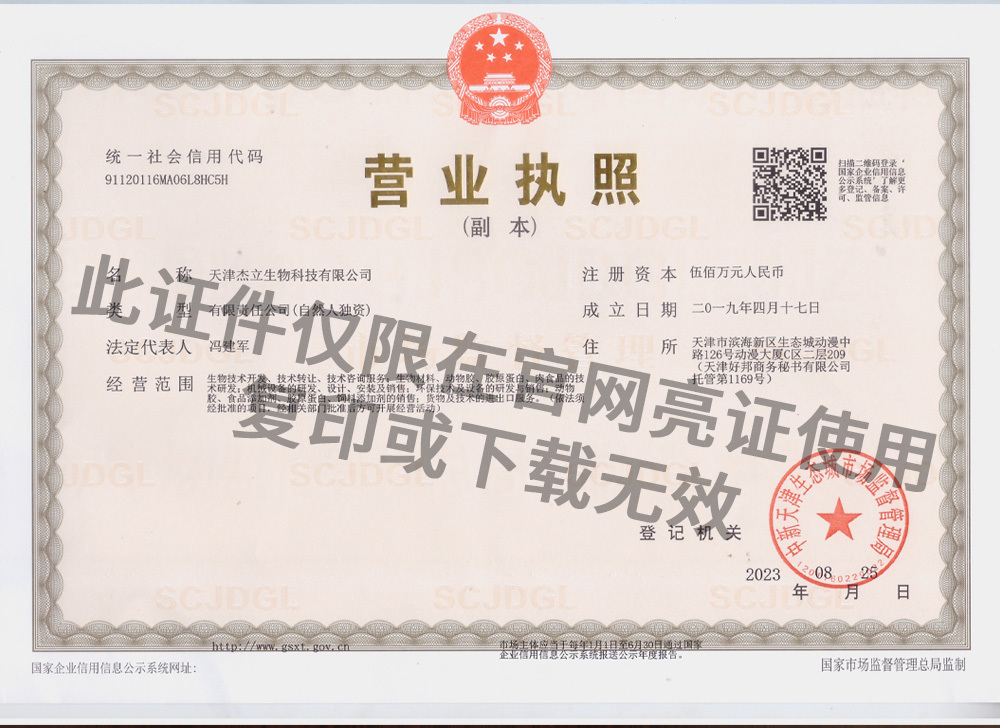
Tianjin Jieligel Biological Technology Co., Ltd | Powered by www.300.cn | Business license | SEO | Privacy Policy