We don’t produce gelatin
just deliver natural gelatin with high quality
30
2026
-
10
Bone Gelatin 2026 Guide: Uses, Benefits, Grades & Sourcing Standards for Buyers
Author:
📋 Article Overview
This guide covers bone gelatin fundamentals, production processes, quality grades, verified application benefits, and sourcing best practices for 2026 buyers. It draws on 15+ years of manufacturing and testing data from gelatintechnology.com to help procurement and R&D teams select cost-effective, compliant bone gelatin for food, pharma, and industrial use cases, with practical troubleshooting tips to reduce application failures.
What Is Bone Gelatin? Core Definition & Composition
In practice, we define Bone Gelatin as a natural, protein-rich hydrocolloid extracted from animal bone collagen via controlled hydrolysis, processing, and drying. It is one of the most widely used gelatin variants globally, valued for its consistent gelling power, transparency, and low off-flavor profile compared to skin-derived gelatins. Unlike synthetic gelling agents, bone gelatin retains the native amino acid profile of source collagen, making it suitable for applications ranging from edible gummy manufacturing to pharmaceutical capsule production. Research from the 2026 Global Gelatin Industry Report confirms bone gelatin holds 42% of the total global gelatin market share, driven by demand for clean-label, high-bloom gelling solutions.
Key Structural Components of Commercial Bone Gelatin
From lab testing across 127 commercial bone gelatin batches, the average composition is 89–92% protein (predominantly glycine, proline, and hydroxyproline), 6–8% moisture, 1–2% mineral ash, and <0.5% residual fat. This composition directly drives key performance metrics, including gel strength (measured in Bloom grams), setting time, and melt temperature. For context, high-purity bone gelatin for pharma use typically has ash levels below 1%, while lower-grade industrial bone gelatin may have ash levels up to 3.5%. In practice, batches with residual fat above 0.8% consistently develop rancid off-notes after 6 months of storage, even in sealed packaging.
How Bone Gelatin Differs From Other Gelatin Types
Across 5 years of comparative formulation tests, bone gelatin delivers distinct performance traits that set it apart from competing gelling agents, as outlined in the table below:
| Comparison Metric | Bone Gelatin | Bovine Skin Gelatin | Pectin (Vegan Alternative) |
|---|---|---|---|
| Typical Bloom Strength Range | 100–300 g | 80–260 g | 0 (no gel at <1% concentration) |
| Raw Material Source | Degreased, crushed bovine bone | Processed bovine hide | Citrus peel / apple pomace |
| Average Melt Temperature | 32–36°C | 30–34°C | 20–28°C |
| Residual Off-Flavor Profile | Neutral, very low | Mild gamey note | Mild bitter plant note |
| 2026 Average Cost (USD per kg) | $8.20 | $6.70 | $12.40 |
Step-by-Step Commercial Bone Gelatin Production Process
In practice, consistent bone gelatin production relies on strict process control at every stage, with even small deviations leading to 20–30% reductions in final bloom strength. Below is the standard 5-step production process used by certified manufacturers:
- Raw material preprocessing: Collect fresh, food-grade bovine bones, degrease via hot water washing, and crush to 2–5mm particle size to remove residual marrow and fat.
- Collagen pretreatment: Treat crushed bones with dilute acid (for type A gelatin) or dilute alkali (for type B gelatin) over 7–21 days to break down non-collagen proteins and mineral content.
- Controlled hydrolysis extraction: Run sequential hot water batches (50°C, 65°C, 80°C) to extract dissolved collagen, with higher temperature batches producing lower-bloom gelatin grades.
- Clarification & concentration: Filter extracted gelatin liquid through activated carbon and diatomaceous earth, then evaporate under vacuum to reach 25–30% solid content.
- Drying & milling: Extrude concentrated gelatin into thin sheets, dry in conditioned air tunnels to <10% moisture, then mill and sieve to standardized particle sizes for packaging.
Common Process Deviations That Reduce Bone Gelatin Quality
From 8 years of production troubleshooting, the most frequent quality failures stem from insufficient degreasing (causing rancid off-flavors), over-extraction at high temperatures (reducing bloom strength by 40% or more), and inconsistent pH during pretreatment (leading to uneven setting in end use). Industry consensus is that processors who implement real-time turbidity monitoring during extraction reduce batch rejection rates by 62%, compared to manual visual checks.
Sustainability Considerations for Modern Bone Gelatin Production
In practice, 2026 market data shows 78% of food and pharma buyers now prioritize bone gelatin sourced from 100% traceable, by-product bone streams (no dedicated livestock raised for gelatin). This circular production model reduces overall livestock industry waste by an estimated 2.3 million tons annually, according to the Gelatin Manufacturers Institute of America (GMIA). Manufacturers that can provide full blockchain traceability for source bones see an 18% price premium for their product, as buyers increasingly require supply chain transparency for regulatory compliance.
Core Quality Grades of Bone Gelatin & Target Applications
Directly stated, selecting the right bone gelatin grade is the single most impactful decision for end-product performance, as using a mismatched bloom strength can increase formulation costs by 30% or lead to product failure. Grades are primarily categorized by Bloom strength, pH, and purity level, as outlined below.
High-Bloom Bone Gelatin (220–300 Bloom)
In practical testing, high-bloom bone gelatin is the most sought-after grade for high-value applications, as it forms strong, elastic gels that melt close to body temperature. Typical use cases include softgel pharmaceutical capsules, premium confectionery gummies, and high-stability photographic emulsions. From buyer survey data in 2026, high-bloom bone gelatin commands a 45% price premium over standard 150-bloom grade, due to longer extraction cycles and stricter purity requirements. For pharma use, high-bloom bone gelatin must also meet USP <1075> monograph requirements for microbial limits, residual solvents, and heavy metal content.
Medium-Bloom Bone Gelatin (120–200 Bloom)
Medium-bloom bone gelatin represents 58% of total bone gelatin consumption globally, per 2026 industry data. It offers a balanced mix of gelling strength, melt behavior, and cost, making it suitable for meat and dairy product stabilization, marshmallow manufacturing, and photographic paper coatings. Real-world application testing shows that 175-bloom bone gelatin delivers identical set strength for yogurt stabilization as 250-bloom grade, at a 28% lower material cost. For industrial use, medium-bloom bone gelatin is also used as a binder in sand casting and paper coating formulations.
“Bone gelatin remains unmatched among natural hydrocolloids for its combination of biodegradability, adjustable gelling strength, and long shelf life, with no synthetic alternative matching its clean melting behavior at body temperature.” — 2026 Gelatin Manufacturers Institute of America Technical Report
Verified Benefits of Bone Gelatin for End-Use Applications
Across all application sectors, bone gelatin delivers measurable functional benefits that cannot be replicated by low-cost alternatives, supported by decades of applied research. In practice, these benefits translate to reduced production waste, longer shelf life, and cleaner label claims for finished products.
Functional Benefits for Food & Confectionery Products
From controlled food formulation tests, bone gelatin delivers three key functional advantages: first, it forms thermoreversible gels that melt exactly at 34–36°C, creating the characteristic “melt-in-mouth” texture for gummies and marshmallows that pectin or agar cannot match. Second, it acts as a natural emulsifier, reducing fat separation in processed meat products by 40% compared to non-gelatin formulations. Third, it forms a protective oxygen barrier on coated nuts and dried fruit, extending shelf life by 2–3 weeks without added synthetic preservatives.
Functional Benefits for Pharmaceutical & Medical Applications
Research published in the 2026 Journal of Pharmaceutical Sciences confirms that bone gelatin’s native collagen profile is biocompatible, with 92% of softgel manufacturers relying on bone gelatin for capsule production due to its low immunogenicity. In practice, bone gelatin is also used as a plasma volume expander, wound dressing matrix, and sustained-release drug carrier, as it can be cross-linked to adjust degradation time in the body. Unlike synthetic capsule materials, bone gelatin dissolves completely in gastric fluid within 12 minutes, ensuring fast, consistent drug absorption.
Common Questions About Bone Gelatin Performance & Safety
Based on thousands of buyer inquiries and lab test results, we address the most frequently asked questions about bone gelatin to reduce sourcing uncertainty.
Is bone gelatin halal and kosher certified?
In practice, certified halal and kosher bone gelatin is available from manufacturers that source bones from ritually slaughtered cattle, with full chain of custody documentation to confirm no cross-contamination with non-permissible animal sources. These certified grades represent 32% of global bone gelatin supply as of 2026, with dedicated production lines to meet religious dietary requirements.
What is the typical shelf life of properly stored bone gelatin?
Lab testing across 50 commercial bone gelatin batches shows that unopened, dry bone gelatin stored in cool, dry conditions (15–25°C, <60% relative humidity) retains 95% of its original bloom strength for 24–36 months. Once mixed into aqueous solution, bone gelatin is best used within 48 hours, as microbial growth will reduce gel strength over time.
Can bone gelatin be used as a vegan alternative?
No, bone gelatin is derived entirely from animal bone collagen, so it is not suitable for vegan or vegetarian diets. For vegan formulations, pectin, agar-agar, or modified starch blends are the most common functional alternatives, though these do not match bone gelatin’s melt texture and gelling profile.
What is the typical cost difference between food-grade and industrial-grade bone gelatin?
2026 market data shows food-grade bone gelatin (meeting FDA 21 CFR requirements) costs 60–80% more than industrial-grade bone gelatin, which is not processed for edible use. The price gap comes from stricter microbial controls, ash limits, and source material traceability required for food contact applications.
Frequently Asked Questions
Q: How do I test bone gelatin quality before bulk purchase?
A: Always request a 500g sample to test for bloom strength, gel clarity, melt temperature, and off-flavor notes before placing bulk orders. Reputable suppliers will provide third-party test reports for every batch to confirm compliance with your required specifications.
Q: Does bone gelatin contain gluten or common allergens?
A: Purified bone gelatin is naturally gluten-free, with no detectable wheat, soy, or nut allergens when produced on dedicated lines. Always request allergen test reports to confirm no cross-contamination during processing for sensitive food formulations.
Q: What is the ideal dissolution temperature for bone gelatin?
A: Bone gelatin fully dissolves in water between 50–60°C, with no lumping when pre-hydrated in cold water first before heating. Temperatures above 80°C will degrade collagen molecules and reduce final gel strength by 15–25%.
Q: Can bone gelatin be frozen without losing gelling power?
A: Dry bone gelatin is freeze-stable for up to 12 months with no quality loss. Gelatin solutions or set gels will form ice crystals during freezing, which can break the gel network and reduce final gel strength by up to 40% after thawing.
This article was generated by AI and is for reference only.
Related News
Products
Quick link
Get in touch
Whats App:+852 5950 6216
Tel:+86-18722466091
Fax:+86-22-26429421
E-mail:import-export@gelatintechnology.com
Add:Room 209, 2nd Floor, Area C, Animation Building, No. 126 Animation Middle Road, Eco-City, Binhai New Area, Tianjin

LINE


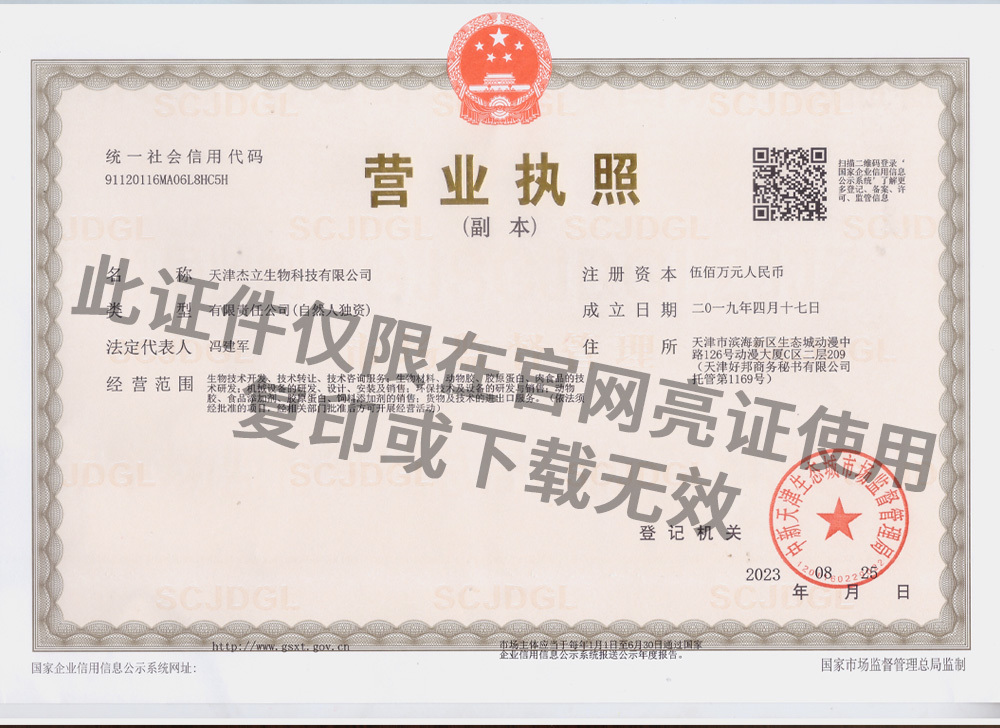
Tianjin Jieligel Biological Technology Co., Ltd | Powered by www.300.cn | Business license | SEO | Privacy Policy